Preventive Health Conference 2025 – UPSIDE DOWN
Shifting Perspectives on Health in Everyday Places
25 November 2025
Written by: Janneke van Wijngaarden
Photos by: Lize Kraan (Find all pictures of the conference here)
By the end of the day, one message rang crystal clear: if we want healthier futures, we have to take a leap together! Not alone in our own disciplines, institutes or sectors, but across boundaries: between researchers and designers, doctors and health care professionals, architects and young people, policy-makers and people with lived experience.
One reflection from the day sums up what the conference made visible:
“Innovative, creative ideas for a healthy and resilient future are not as far away as they seem. When you bring people with different perspectives – from academia and from practice – into one room, a lot of good things can emerge.”
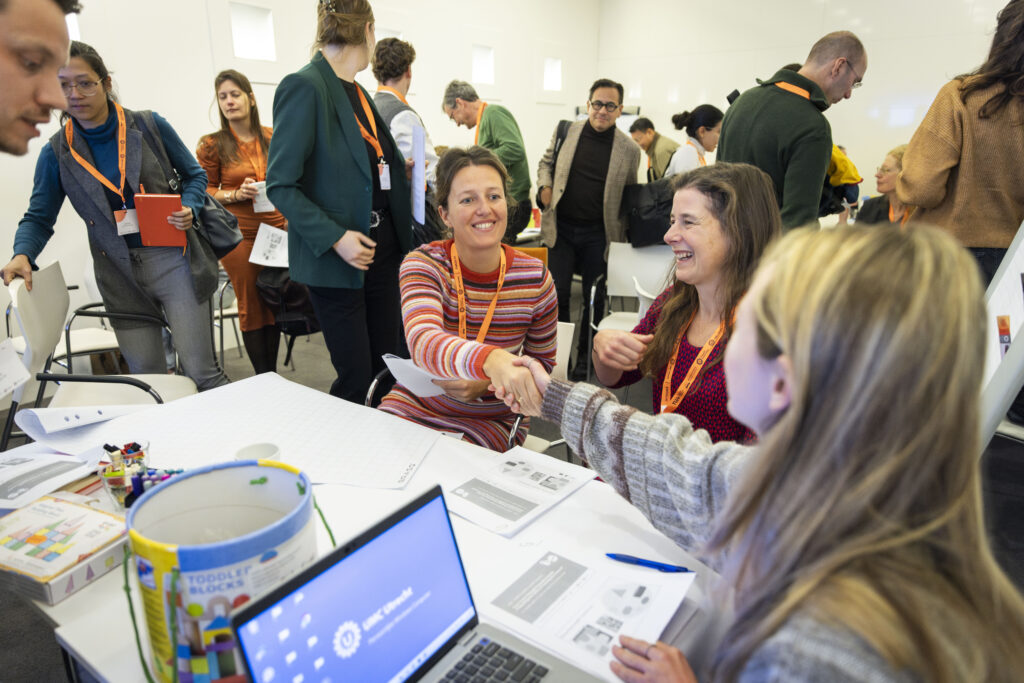
Participants did not just talk about futures; they built them in LEGO, experienced them in VR, sketched impact pathways, and reimagined homes, neighbourhoods and health systems. They also discovered that imagination grows stronger when practiced together.
Participants left with three shared conclusions:
- Imagination is not a luxury; it is infrastructure. “We often forget that imagination is one of our biggest powers”, one participant remarked. The conference kept returning to this point: unless we dare to imagine different futures, we stay locked in today’s constraints.
- Everyday places are powerful health engines. Homes, neighbourhoods, schools, digital spaces – these are the “health amplifiers” where prevention either quietly succeeds or silently fails.
- Action starts now, in small, shared leaps. Many sessions challenged participants to ask: What can I already do differently tomorrow? Who can I do it with?
The program itself was turned upside down. Instead of opening with long keynotes, the day created space first for interactive sessions, connection and co-creation, and closed with two powerful keynotes. It worked: people stayed engaged, curious, and ready to take a leap together, not just in theory, but in practice!
Opening and Atmosphere: Landing Softly, Launching Boldly
The conference began on a misty November morning with heavy traffic outside, but inside the mood was calm and welcoming. The start time allowed people to arrive without rush; coffee and delicious cakes were waiting. The venue – with its vintage-futuristic design, colourful auditorium and almost “spaceship” like ambiance – set the tone for a day of connection, time travel, imagination and experimentation.
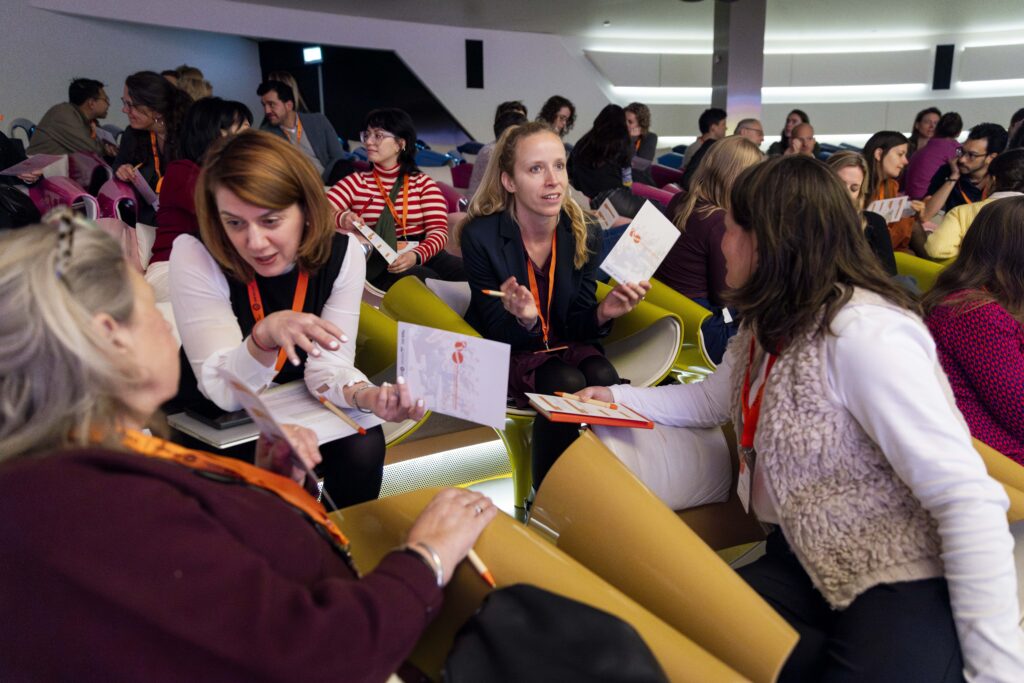
After a warm welcome, Ir. Martine van der Mast and Prof. Roel Vermeulen introduced the Institute for Preventive Health (i4PH) and its mission: to connect people from academia, government, industry and NGOs who want to work on healthier futures, linking preventive health to sustainability and climate challenges.
Rather than long speeches, the opening quickly shifted to interaction. Participants connected with people they did not yet know, filled “share and connect” cards, and even generated ideas for next year’s conference. Many noted how approachable others felt:
“I met new people whom I now feel I can easily approach when I see them again.”
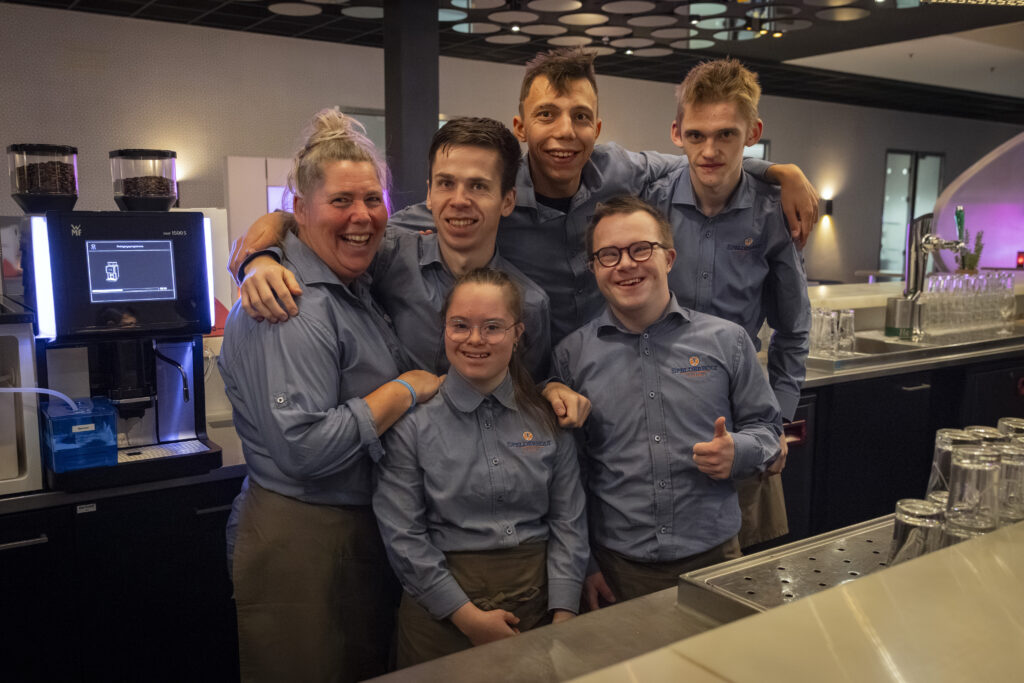
Throughout the day, catering by the enthusiastic team of Spelderholt Academy provided a healthy lunch and festive drinks and bites at the close. The result was a relaxed, open atmosphere in which new collaborations could arise almost naturally.
Towards the Next Edition
What will be next year’s theme? The answer is already in the cards that were created together. Will it be: “Leaping Together: From Imagining Futures to Building Everyday Infrastructures for Preventive Health”? Stay tuned!
Until then, the invitation from this year’s conference remains:
“keep imagining better worlds, keep connecting across boundaries, and keep making space for everyday actions that move us, collectively, towards healthier futures!”
Keynotes: Futures of Home and Society
Living as Medicine 2040 – Prof. Dr. Masi Mohammadi
Prof. Masi Mohammadi sketched a future in which homes and neighbourhoods act as empathic health infrastructures. In this vision, the living environment becomes an active partner in prevention: not by constant monitoring, but by quietly enabling and activating people in their everyday lives.
She described how static housing types might evolve into adaptive living forms – such as the Attentive Home, the Caring Cluster and the Neighbourhood Nervous System – designed to expand people’s capability and preserve personhood as they age. Backcasting from 2040 reframed “ageing in place” into thriving in place, with movement, connection and dignity as guiding principles.
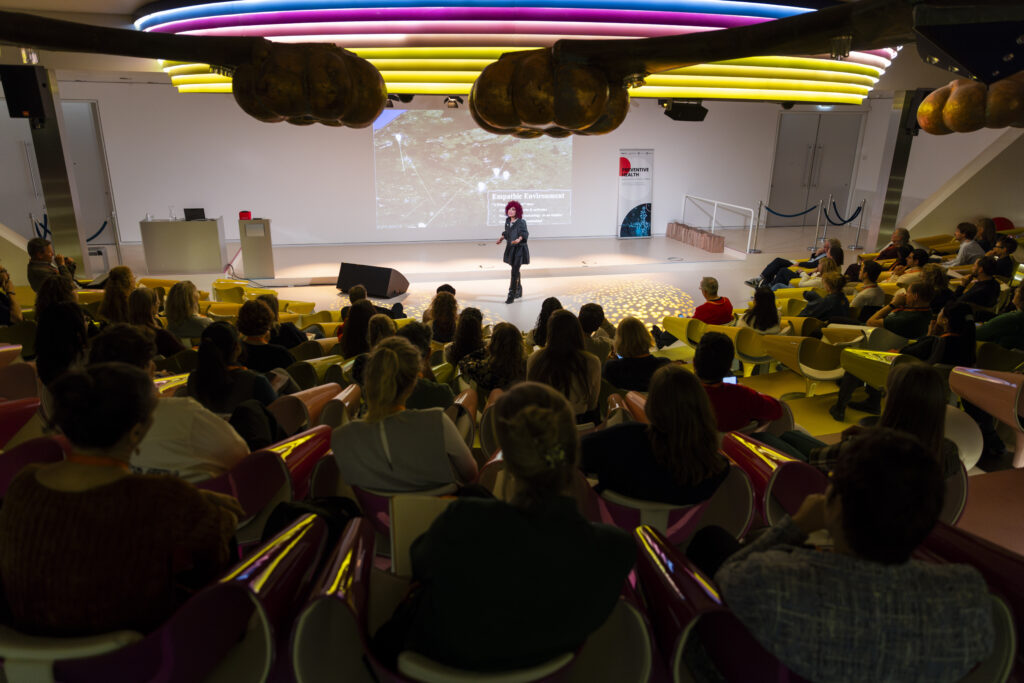
Her reflections on dementia and chronic disease were particularly striking. Citing the example of Kate Swaffer, diagnosed with early-onset dementia at the age of 49 who said, “I didn’t just go home and die”, she challenged the audience to move beyond fear-based stigmas and redesign society for a century-long life course. That means predictive, preventive, personalised and participatory solutions that are woven into everyday spaces, not only into care institutions.
The message: if we want environments that truly support preventive health, we must look beyond gadgets to socio-spatial design, and align technology, policy and practice.
From Captured to Captivating Futures – Prof. Dr. Maarten Hajer
Prof. Maarten Hajer invited participants on a time leap to 2052, where historian Maarten Hajer jr. explained how the “roaring 2020s” became the turning point in environmental and health politics. Drawing on the books Neighbourhoods for the Future and Captured Futures, he argued that societies today are facing a “crisis of imagination”: we are overwhelmed with images of what goes wrong, and starved of compelling pictures of what could go right.
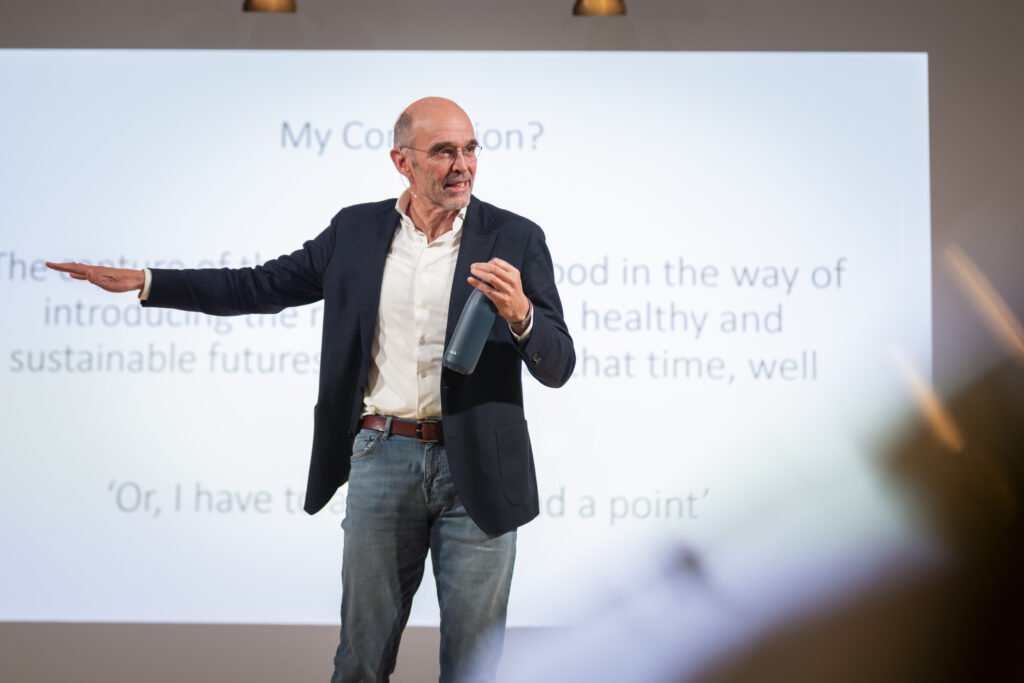
Looking back further, he pointed to the 1920s – with investments in affordable housing and social policies that transformed public health – as proof that big leaps are possible. His call to the audience:
- Keep believing that other worlds are possible.
- Work “not for the people, but with the people”.
- Organize yourself and dare to step away from cumulative “more of the same” models in science.
His talk connected strongly to the conference theme: to shift perspectives on health in everyday places, we must also shift how we think about time, responsibility and possibility.
Breakout Sessions: Practice in Motion
1. The Role of the Living Environment on Health: a Future Perspective
This session took participants into the Netherlands of 2120. Through the NL2120 vision, Tim van Hattum showed how a climate-resilient, biodiverse country could make health a central value in spatial planning. Greener cities, nature-based solutions and redesigned landscapes were presented not only as climate measures, but as long-term health investments.
Lucas de Haan highlighted how strong bridges between science and practice are essential to make green environments truly work for preventive health. Because health benefits unfold over time, collaboration and continuity are key.
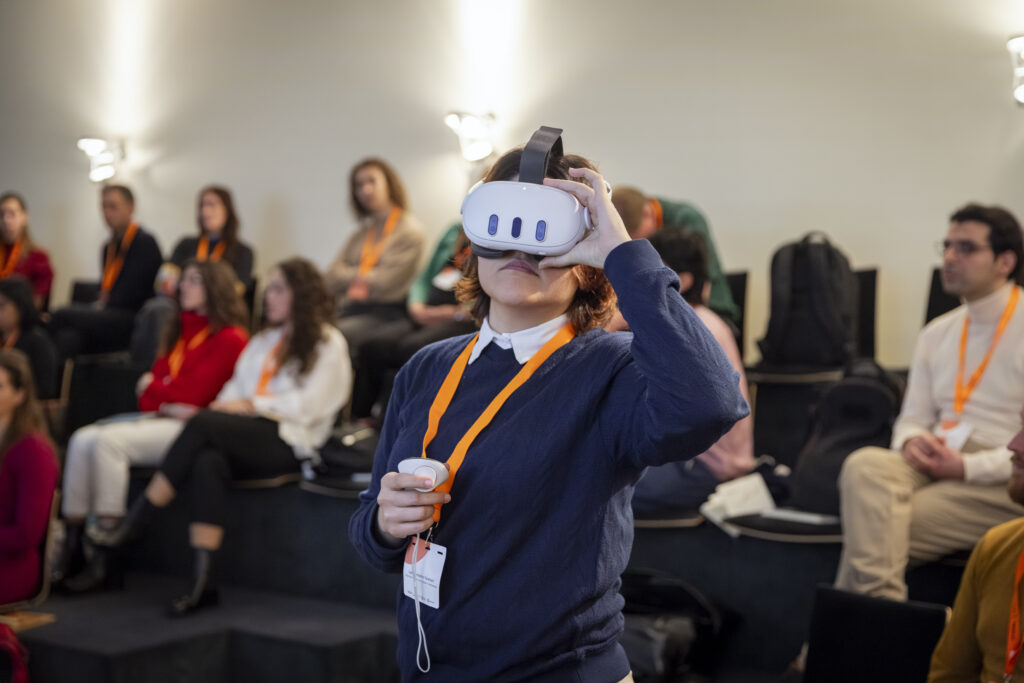
Alexander Klippel demonstrated how VR experiences can help people explore different future environments and feel their impact, while physiological and behavioural data provide evidence for policy decisions.
Takeaways included:
- Decisions about land use today must anticipate future health – nature-based solutions are preventive health interventions.
- The Netherlands needs a narrative for 2120 that places health at its core, beyond isolated pilots.
- Funding structures must learn to finance integrated questions, not just siloed projects.
2. Research Geared Towards Impact: Starting with the End in Mind
In this hands-on workshop, participants worked with real EWUU seed fund cases to design impact pathways, guided by Erik van Tilborg. Instead of treating impact as a final paragraph in a grant, they began by asking: Who should benefit from this work, and how will it reach them?
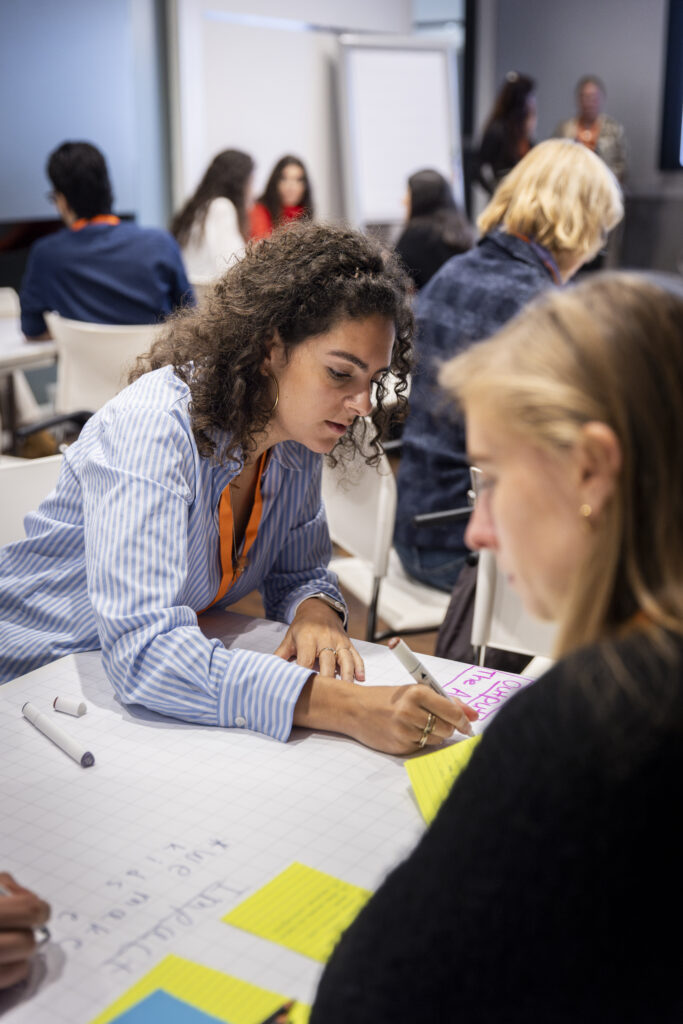
Researchers Hanna Hauptmann and Parvaneh Parvin presented their projects and invited participants to map concrete routes from research outputs to stakeholders and end-users. Tables quickly filled with colourful diagrams and lively discussions.
Key points:
- Impact doesn’t happen automatically. It takes a clear, concrete strategy to make sure your research truly benefits people and society. Funders increasingly ask for this — because real change only happens when results reach those who can use them.
- Impact is co-created. Engage stakeholders early to create “market pull” instead of “tech push”.
- Think about adoption from the ideation phase onward: Who needs to use your results, and what do they require?
- Choose valorisation routes (commercial or not) that maximise sustainable impact – and plan for them.
The session underlined that if research is to change everyday health, impact thinking has to be embedded from the start. “many researchers are not yet familiar with designing for impact – we need more spaces like this to learn it together”.
3. Turning the Tables: When Lived Experience Leads
In this breakout, members of the i4PH participation panel turned the usual dynamic upside down: people in vulnerable circumstances led the conversation, and researchers listened.
Through examples of collaborations that worked – and those that did not – panel members emphasised that research on health and lifestyle should be done with people, not about them. They spoke candidly about what it feels like to be invited as “experience experts”, but then not be properly listened to, or not fairly reimbursed. Practical details like expired vouchers sent a clear message: some contributions are still undervalued.
The language bingo made the impact of words painfully clear. Terms like “problem family”, “vulnerable group”, or “low education” were shown to create distance and stigma instead of connection.
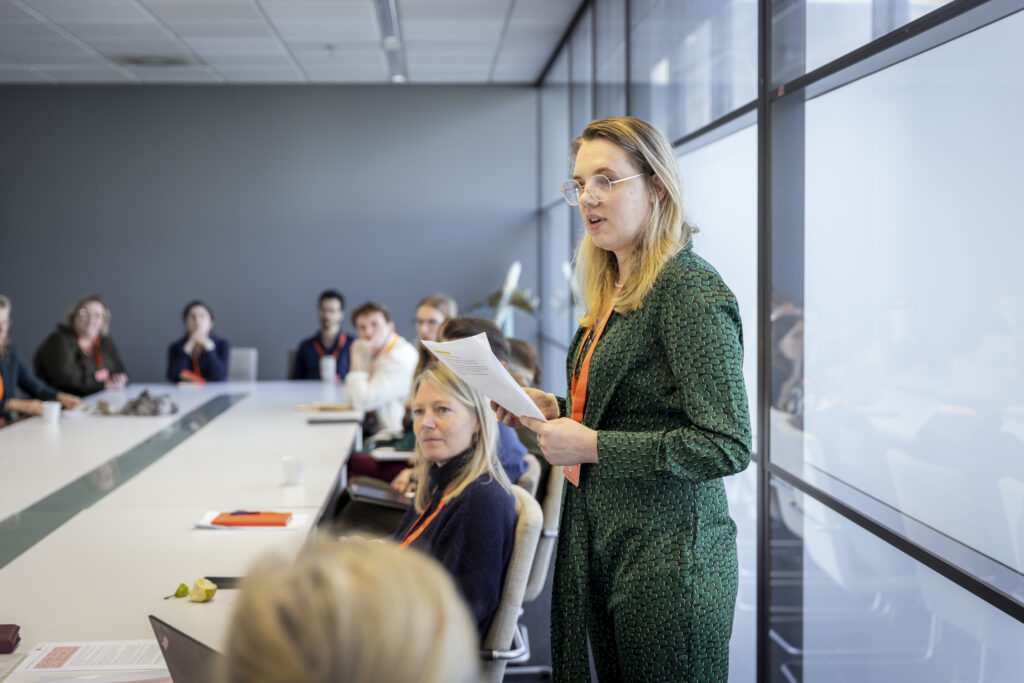
The central insight: if preventive health is to work for everyone, then respectful, long-term partnerships with people in vulnerable circumstances are not optional: they are essential.
4. Health@Home: Ageing and Agency Turned Upside Down
This session explored what happens when we stop seeing older adults as passive recipients of care and instead involve them as co-designers of their own environments and tools.
Topics ranged from digital tools for social connection after retirement, to age-friendly kitchen design, to technologies for dementia care and lifestyle telemonitoring, to the impact of a vegan diet on muscle health in older adults. The red thread was agency: how to support older people in remaining active, connected and in control.
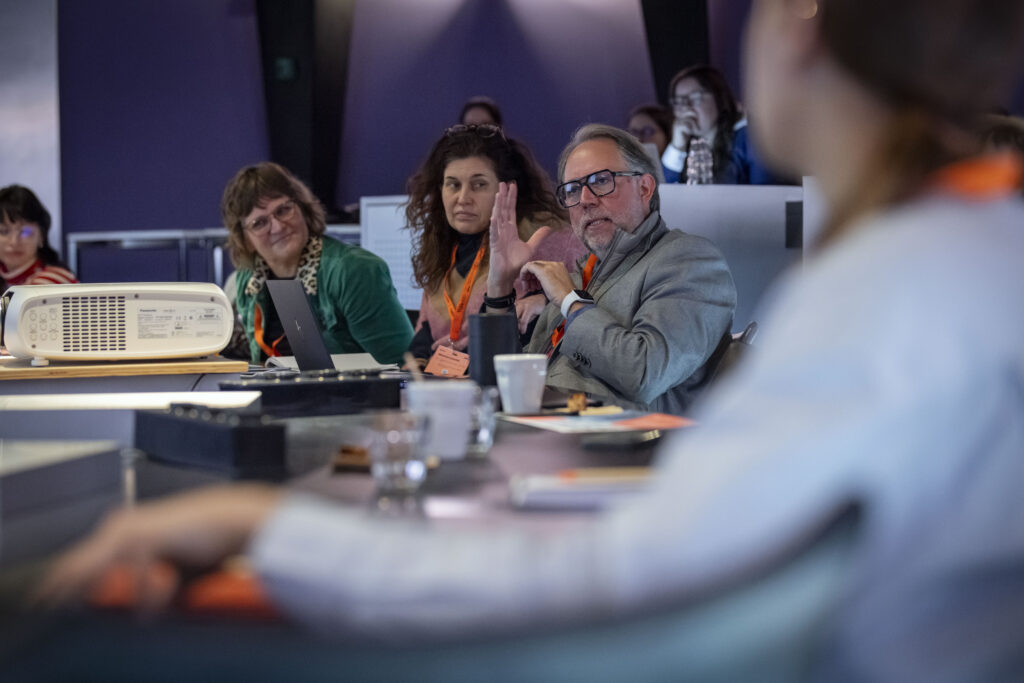
Discussion points included:
- People prefer simple, intuitive tools: familiar apps for existing contacts and separate, easy-to-use platforms for new connections.
- Technology should act as a co-pilot, not take over the driver’s seat.
- Fair data governance is crucial: citizens should have more control over how their health data is used.
Collaboration between design, medicine, technology and everyday users emerged as a powerful way to increase both the quality and the relevance of research.
5. Time Travel Through Preventive Health: Presenting the Future or Futuring the Present?
This playful yet serious session invited participants to “time travel” through preventive health using LEGO and group dialogue. In the first part, Claudia Egher and Wouter Boon shared emerging insights on how preventive health is currently organised in the Netherlands, highlighting tensions and aspirations. In the second part, Catrin Finkenauer and Daphne van der Bend focused on youth resilience.
In small groups, participants built ideal environments for children aged 6 – 16 years. The building exercise made questions concrete:
Who supports children when life gets difficult? What does a warm, constructive and healthy environment look like? Which actors are essential?
One reflection captured the spirit of the session: it was “beautiful to see how participants became so creatively absorbed in building their future world – the LEGO brought out their inner child and sparked powerful ideas.”
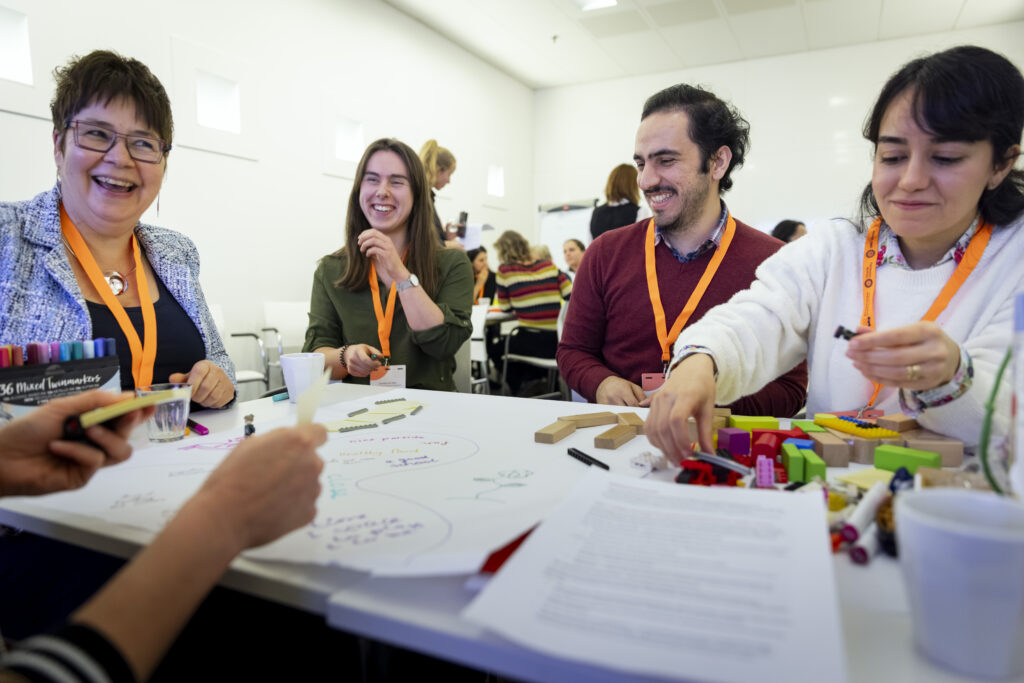
The session confirmed once again that true human connection remains fundamental to wellbeing. Structures and services matter, but a listening ear and a supportive arm around the shoulder are vital.
6. A Quest to Understanding and Preventing Early-Onset Cancer
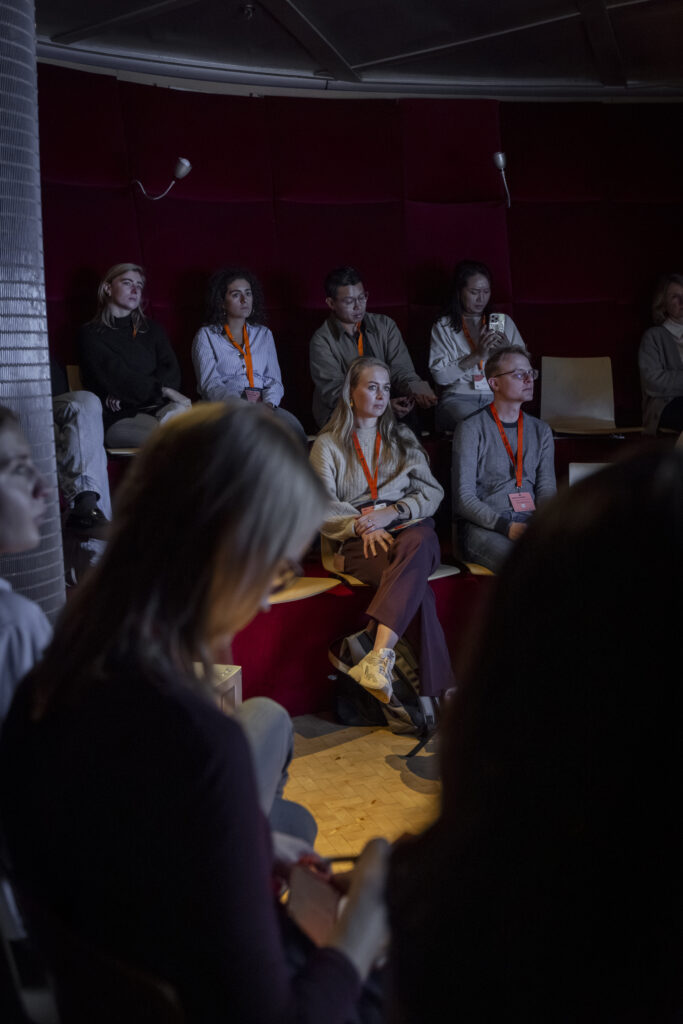
This session addressed the rise of early-onset cancers and the long-term consequences of childhood and young adult cancers. Researchers and practitioners explored both biomedical and ethical questions.
Participants heard how childhood cancer survivors face elevated risks of health problems later in life, and how much is already known about associated risk factors. At the same time, the group discussed what should guide future screening and diagnostic strategies: What counts as health data? Should priority go to those at highest risk, or those who can benefit most?
Key takeaways:
- We already know a great deal about risk factors in childhood cancer survivors; the question now is how to translate this into action.
- Ethical reflection is not a side issue but central to designing fair and effective interventions.
To summarize the breakout sessions: they ranged from nature-based health futures, impact-driven research and lived-experience leadership to ageing at home, youth resilience and early-onset cancer. Discussions were lively, connections were made, new insights were learned. And, across all of them, one message returned:
Healthy futures will happen when we dare to take a leap — together!
Want to see more? Find all pictures of the conference here.